To keep conversation going at a group dinner, plan the table before anyone arrives: seat people so nobody is stranded at an end, open with one easy topic everyone can answer, ask follow-up questions instead of jumping to new subjects, bring quiet guests in by name and change the rhythm with each course. Most silences at a dinner with new people are not about personalities; they come from a table that is too long, a host who is busy with the menu, or questions that end in one-word answers. This guide shows hosts how to fix each of those, with topics that work, what to do when the table goes quiet and how to end the evening on a high.
Short answer: keep the group small (four to six is easiest), seat talkers next to quieter guests, ask open questions and then follow up on the answers, rotate topics by course, and treat short pauses as normal. When a lull lasts, go back to something someone said earlier; it is the easiest restart there is.
How to keep conversation going at a group dinner: start before it begins
Most of the work of keeping conversation going at a group dinner happens before the first drink is poured. Three decisions matter more than any clever question.
Keep the group small
A table of four to six can hold one shared conversation. At eight or more, the table usually splits into two or three conversations, and the people in the middle get pulled both ways. If you are deciding how many seats to offer, our guide on how many people to invite to a dinner with strangers walks through the trade-offs.
Pick a table and a place that help
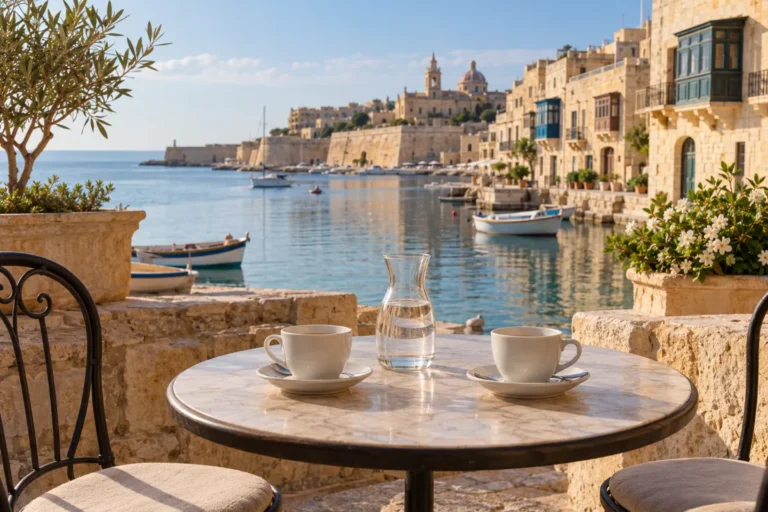
A round or square table beats a long thin one, because everyone can see everyone. Ask the restaurant for a quieter corner rather than a spot next to the speakers or the kitchen door. A terrace in a side street is often calmer than the main square. Shared plates also help: passing dishes gives people something to do with their hands and a natural reason to talk. For venue ideas, see restaurants in Valletta that suit group dinners.
Plan the seating
- Put yourself in the middle, not at the head, so you can reach both ends.
- Seat confident talkers next to quieter guests rather than all together.
- Do not leave anyone alone at a corner seat with only one neighbour.
- If two guests already know each other, split them up so they do not form a private conversation.

The first 15 minutes
The opening sets the tone for the whole evening. Your job as host is to make the first few minutes easy for everyone.
- Arrive first. Greet each guest as they come in and introduce them to whoever is already there, with one detail: “This is Mark, he has just moved here from Lyon.”
- Give everyone one shared question. Something anyone can answer in a sentence or two works best: “How did you end up in Malta?” or “What is the best thing you have eaten on the island so far?”
- Order early. Hovering over menus for twenty minutes kills momentum. Suggest a few shared starters so the table has something to react to.
- Warm up the quiet ones. If you know a guest is shy, ask them something they will enjoy answering, ideally about a topic from their join note.
For openers that do not feel forced, our list of icebreakers for hosting strangers has more ideas.
Follow-up questions: the skill that does most of the work
The single most useful habit at a dinner table is the follow-up question. Instead of asking a new question when someone finishes answering, ask about what they just said. “Where did you dive?” after “I did my first dive course last month” keeps the thread going and shows you were listening.
There is research behind this. In a series of studies of real conversations published in the Journal of Personality and Social Psychology, Huang and colleagues found that people who asked more questions, especially follow-up questions, were better liked by the people they talked to. The same habit makes a dinner table feel warmer.
| Closed question (ends the thread) | Open or follow-up question (keeps it going) |
|---|---|
| Do you like Malta? | What surprised you most when you moved here? |
| Do you work in gaming? | What does a normal week look like in your job? |
| Have you been to Gozo? | Where would you take a friend on their first day in Gozo? |
| Do you cook? | What is the dish you make when you want to impress people? |
| Nice holiday? | What was the best meal of the trip? |
Topics for each course
Changing the type of conversation with each course stops the energy from sagging halfway through. Use this as a loose guide, not a script.
- Drinks and starters: easy and shared. How people ended up in Malta, where they live on the island, the dishes on the table, favourite spots for a swim or a walk.
- Main course: stories. Travel stories, a job or hobby someone is passionate about, the best concert they have been to, a skill they are learning. This is when longer answers are welcome.
- Dessert and coffee: forward-looking. Plans for the weekend, festas or concerts coming up, places people still want to see. Forward-looking topics often turn into the next plan.
How to rescue a lull
First, relax: a pause of a few seconds while people eat is normal and nobody notices it as much as the host does. If the silence stretches, try one of these, in this order:
- Go back to an earlier thread. “Sara, you were saying you tried padel last week, how did it go?” Callbacks are the easiest restart because the topic is already warm.
- Ask the whole table one open question. “What is one place in Malta everyone should see?” Questions with many possible answers get several people talking.
- Use the surroundings. The food, the view, the street outside or a festa band passing by are all fair game.
- Change the set-up. Order dessert, suggest swapping seats for coffee, or move to a nearby bar for one last drink. A small change of scene resets the energy.

Tricky moments and how to handle them
One person dominates
Wait for a breath, thank them for the story and pass the next question to someone else by name: “That reminds me, Anna, you said you dive. Where is your favourite spot?” It moves the spotlight without making anyone feel told off.
Someone has gone quiet
Ask them something specific and easy, ideally related to what they mentioned earlier or in their join note. Avoid putting them on the spot with “you are quiet”. If they prefer listening, that is fine too.
The table splits into two conversations
At five or more people this is natural. Let it happen, then pull everyone back together with a question for the whole table when the next course arrives.
A topic gets heated
Politics, religion and money can sour a first dinner. Acknowledge both sides lightly, then steer: “Fair points. Totally different subject: has anyone been to a festa yet this year?”
Talking about the bill
Money is easier when it is clear before the dinner starts. If the plan was posted as split or pay your own, everyone already knows what to expect. Our guide to setting a budget for a group dinner covers how to keep it simple.
Ending the dinner well
End while the energy is still good rather than waiting for it to fade. Settle the bill, thank everyone for coming and, if the group got on, suggest a next step: a coffee next week, a walk, or a second dinner somewhere new. People remember the end of an evening more than the middle.
If you post a plan on MeetNow, it already shows the place, the time, the seats and who pays: host pays, split, pay your own or free. You pick who joins from the requests, and accepted guests share a group chat, which is a good place to say thank you afterwards. After the dinner, you and your guests can confirm “we met”, which builds everyone’s track record. For the full set-up, see how to host a group dinner with strangers in Malta.
Safety box
- Host dinners at a public restaurant or café, never at your home or a guest’s home for a first meeting.
- Tell a friend where you are going and when you expect to finish.
- Arrange your own way home and check the last convenient bus or a taxi option in advance.
- Drink at your own pace and keep an eye on your drink.
- Leave if anything makes you uncomfortable. You do not owe anyone an explanation. In an emergency in Malta, call 112.
Want to turn this into an actual plan? Open MeetNow and see the plans near you.
Related questions
- How many people should I invite to a dinner with strangers?
- Which icebreakers work for hosting strangers?
- How do I set a budget for a group dinner?
- How do I join a group dinner with new people in Malta?
Frequently asked questions (FAQ)
How do you keep conversation going at a group dinner with strangers?
Seat people so the quieter guests are not on the ends, open with an easy shared topic, ask follow-up questions rather than new ones, pull in anyone who has gone quiet by name, and change the format with each course so energy does not dip.
What should I do if the table goes silent?
Treat a short pause as normal. If it lasts, go back to something someone said earlier, ask the table an open question about food, Malta or plans for the weekend, or point to something happening around you.
How do I handle one person talking over everyone?
Wait for a natural break, thank them for the story and pass the question to someone else by name. A light bridge such as “that reminds me, Anna, you said you dive” moves the spotlight without embarrassing anyone.
Which topics are safe at a dinner with new people?
Food, travel, how people ended up in Malta, favourite spots on the island, hobbies, books, films and plans for the coming weeks are easy for everyone. Leave politics, religion, money and dating history until people know each other better.
How many people make the easiest dinner conversation?
Four to six is usually easiest: small enough for one shared conversation, big enough that a pause does not feel awkward. Larger tables tend to split into two or three conversations, which is fine if you expect it.